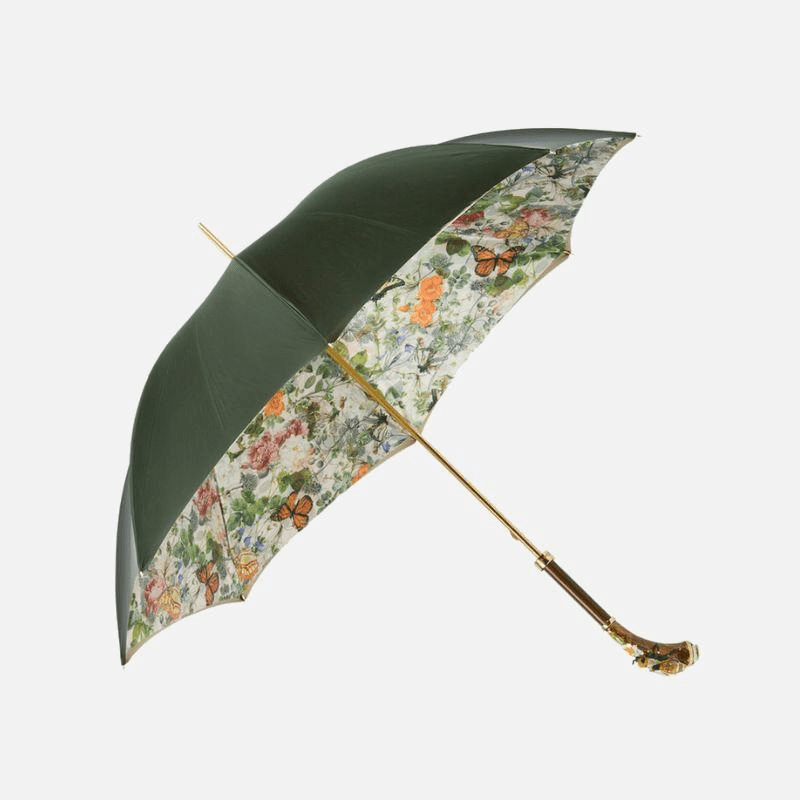

The Subtle Details That Define a Luxury Umbrella
You know the kind—picked up from a random shop when the sky turns unexpectedly gray. I never paid attention to how it felt, how it opened, or how it held up in real weather. It was temporary by design, almost disposable. And honestly, I treated it that way.
That changed the day one of those umbrellas failed me mid-street.
The wind caught it just right, flipped the frame inside out, and for a few seconds I stood there holding something that looked more like a broken wire sculpture than protection. I remember the feeling—not just inconvenience, but a quiet frustration. It wasn’t about the rain. It was about reliability.
That’s when I started noticing what actually matters in a luxury umbrella.
The first thing I became aware of was the frame.
Not visually—it doesn’t stand out at first—but in how it behaves. A well-made frame doesn’t fight the wind. It flexes slightly, absorbs pressure, and returns to shape without drama. Cheaper frames tend to be rigid until they suddenly aren’t, and that’s when they fail.

There’s a kind of confidence in a frame that knows how to bend without breaking.
Then there’s the canopy fabric, something I had ignored for years. At a glance, all umbrellas seem similar—just fabric stretched over ribs. But once you start paying attention, the differences become obvious.
Some fabrics feel thin, almost fragile, like they’re just waiting to wear out. Others have a density to them. Water doesn’t soak in—it beads, gathers, and rolls off almost immediately. It’s subtle, but it changes the entire experience. You shake the umbrella once, and it’s nearly dry.
That small detail feels… intentional.
I also started noticing how an umbrella opens.
It sounds trivial, but it isn’t. Some umbrellas snap open aggressively, almost startling you. Others unfold with a smoother, more controlled motion. That difference might last only a second, but it shapes your perception every time you use it.
Luxury, I’ve learned, often lives in these brief interactions.
Handles surprised me the most.
I used to think they were purely aesthetic—a place for brands to add personality. And yes, design plays a role. A curved wooden handle carries a different presence than a straight rubber one. But the real difference shows up over time.
A good handle settles into your grip. It doesn’t slip when your hand is wet. It doesn’t feel cold and lifeless. Materials like wood or well-finished composites develop a kind of familiarity the more you use them.
You stop thinking about holding it. It just feels right.
Weight is another thing I didn’t expect to matter so much.
A very light umbrella feels convenient at first. Easy to carry, easy to forget. But in strong wind, that lightness can turn into instability. On the other hand, an umbrella that’s too heavy becomes tiring, especially if you’re walking longer distances.
The balance is what matters.
A well-designed umbrella feels stable without feeling burdensome. You notice its presence, but it doesn’t demand your attention. That balance is harder to achieve than it seems, and when you find it, it’s difficult to go back.

I also started appreciating small structural details.
The joints where the ribs connect. The way the shaft locks into place. The tension of the canopy when fully open. These aren’t things you actively inspect, but you feel them through use. When they’re done well, everything feels aligned. When they’re not, there’s always a slight sense of fragility.
And that feeling stays with you.
Durability, of course, is one of the obvious features—but even that is more nuanced than I expected.
It’s not just about surviving one storm. It’s about consistency over time. Does the umbrella still open smoothly after months of use? Does the fabric maintain its structure? Do the ribs stay aligned?
Luxury, in this sense, isn’t about perfection on day one. It’s about how slowly something changes.
There are also things that matter less than I thought.
Brand names, for example. Early on, I assumed that recognizable branding guaranteed quality. Sometimes it does, but not always. I’ve come across understated umbrellas—no visible logo, no marketing noise—that felt more refined than heavily branded ones.
It made me realize that true quality doesn’t need to announce itself.
Color and design fall into a similar category.
Yes, they matter. They shape how the umbrella fits into your overall style. But they don’t define the experience. A beautiful umbrella that performs poorly quickly loses its appeal. On the other hand, a simple, understated design that works flawlessly becomes something you rely on without thinking.
Function tends to outlast aesthetics.
That said, there are small flaws even in better umbrellas.
Some handles, while beautiful, can be slightly less practical in certain conditions. Some mechanisms, designed for smoothness, require a bit more care. And sometimes, a well-built umbrella still feels slightly inconvenient to carry when the weather clears.
No design solves everything.
But the difference is in how these imperfections feel. In a thoughtfully made umbrella, they don’t frustrate you. They just… exist, as part of a larger, well-considered object.
What surprised me most through all of this is how an umbrella can shift from being forgettable to something you actually value.
It’s still a simple object, at its core. It doesn’t transform your day or change your life. But it removes a certain kind of friction. It makes bad weather feel less intrusive, less chaotic.
And that, in its own way, matters.
If someone asked me what features they should focus on, I wouldn’t list specifications or technical terms.

I’d tell them to pay attention to how the umbrella feels in small moments.
How it opens. How it responds to wind. How it sits in your hand. How it behaves after repeated use. Those are the things that stay with you, long after the initial impression fades.
So who is this really for?
Not for someone who just needs quick coverage from rain. There’s nothing wrong with a simple, functional umbrella if that’s all you need.
But for those who notice details—who care about how everyday objects behave over time—these features become meaningful.
Would I recommend paying attention to them?
Yes, but not in a rushed, checklist kind of way.
Take your time. Hold a few different umbrellas. Notice what feels natural and what doesn’t. The right one doesn’t stand out immediately—it reveals itself through use.
And once you experience that difference, even something as ordinary as walking in the rain starts to feel just a little more considered.